With being “found” on the internet playing such a huge role in business these days – from brand awareness right through to online ordering – it’s no surprise how much effort goes into trying to rise up the search engine rankings. After all, it is indisputable that if you don’t appear on the first page of search results, the chances of anyone finding your web site are so much lower.
The question for many print businesses is – what, exactly, can be achieved within a reasonable budget? You can, of course, pay to have your website appear at the top of a search – your site will definitely be seen, however the costs can be quite high. That said, in terms of brand awareness there is no doubt that paid adverts can work – it all boils down to a question of return on investment. Whether the ads pay for themselves, of course, is the key question. Or, to put it another way, what is the most cost-effective way to be found in Google searches that maximises the return on investment?
The answer to that question goes to the heart of the matter, and SEO is a big part of the answer.
If you’re a very large business with a marketing budget to match, then paid ads are a sensible approach to take… however most print businesses aren’t in that position, so it’s important to think carefully about where and how the available marketing budget is spent.
Neat cue to SEO, the death of which, despite some rumours to the contrary, has been grossly exaggerated!
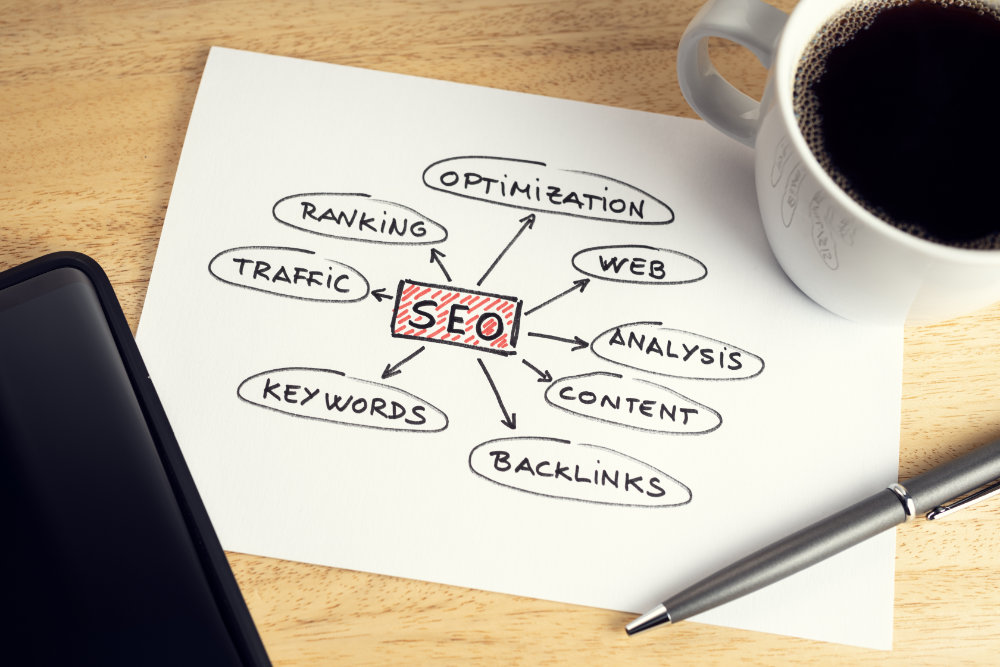
The primary purpose of SEO is to allow bots from search engines to read and interpret your content to place it within search engine rankings, ideally in the top-ranking position for the relevant search term. There is little to no information provided by search engine companies as to how their search engine algorithms work, so SEO is based on research, experience, and shared knowledge throughout the digital community.
The combination of quality content, interesting blogs, regularly updated material, and links to and from other web sites – not to mention all the clever “behind the scenes” stuff like the prudent use of keywords – has three outcomes.
Firstly, your site is more likely to be found high up on the first page entirely on its own merits. Secondly, some users may be more inclined to look at it than at an advert. And thirdly, once a user has found and entered your site, they are more likely to spend time exploring the product catalogue and more likely to buy from you.
An increase in visibility ultimately leads to an increase in traffic to your site. Once you’ve increased your site traffic you can concentrate on increasing visitor conversions to result in more revenue. If you increase your traffic and you increase your conversion rate simultaneously you really are on to a winning combination. The impressive result – more customers buying more of your products.
It’s perhaps understandable that SEO’s effectiveness as a marketing tool has been misunderstood, amidst all the technical language that only the experts really understand, printers running their own business simply don’t have the time or the inclination to be an IT guru.
What’s the solution? Quite simply, give it a try or find someone who can help you to get the most from your site.
If you find online marketing overwhelming and need help with search engine optimisation and your digital marketing strategy, Flex4 offer online marketing services that will help you navigate everything technical and meet your marketing goals for your print eCommerce business.
Find out more about Flex4’s online marketing services at onlineprintsolution.co.uk