
New sustainable collection to debut at Haute Couture Week, Palais de Tokyo, on 26 June
In a groundbreaking collaboration, Epson and renowned Japanese fashion brand YUIMA NAKAZATO revolutionised the fashion industry by leveraging advanced pigment inkjet printing technology on Spiber’s Brewed Protein™ fibre². This innovative approach combined cutting-edge technology with more sustainable practices, setting a new benchmark for responsible textile production.
Fashion designer Yuima Nakazato unveiled his latest collection at Haute Couture Week on 26 June at 1pm CET in the Palais de Tokyo. This much-anticipated event showcased the innovative use of Brewed Protein™ fibres, developed by Spiber using fermentation technology, and Epson’s pigment inkjet printing technology, highlighting the potential for sustainable fashion to captivate and inspire.
YUIMA NAKAZATO’s latest collection featured a unique blended fabric composed of 70% cotton and 30% Spiber’s Brewed Protein™ fibre. Utilizing Epson’s range of pigment inks, YUIMA NAKAZATO printed on this innovative material to create stunning designs.
Traditionally, printing on blended fabrics required different types of dye inks, limiting the ability to achieve desired patterns and designs. However, Epson’s Monna Lisa digital textile printing technology, combined with pigment inks, overcame these limitations, enabling high-resolution prints on various fabric types. This development expanded the creative possibilities for designers like Nakazato, allowing them to bring their visions to life with unprecedented detail and precision.
Pigment ink was particularly well-suited for printing on Brewed Protein™ material. Unlike dye inks, pigment inks are versatile and could be used on various fabric types, whether mono or blended. This flexibility offered fabric manufacturers, brands, and designers an easier and more sustainable means of exploring new textile expressions. Furthermore, pigment ink printing supported the environmental narrative of Brewed Protein™ fibre, aligning with the growing demand for more sustainable materials.
Sustainability was vital
Pigment ink printing offered significant environmental benefits. Unlike analogue dye inks, pigment inks did not require steaming and washing processes after printing. By adopting Epson’s Monna Lisa ML-13000 digital textile printing technology, water consumption was reduced by an impressive 96%³. This innovation made pigment ink printing a more sustainable option for textile production.
[1] Spiber Inc. – Established in September 2007, Spiber is a biotech venture company based in Yamagata, Japan dedicated to creating innovative solutions such as “Brewed Protein™”, a new material platform utilizing microbial fermentation technology inspired by nature’s diversity and circularity.
[2] Brewed Protein™ fiber – the only commercially-available offering within the emerging protein fiber category, Brewed Protein™ is produced through a precision fermentation process using plant-based ingredients and microbes, delivering luxurious textiles with a distinct texture and the potential to significantly reduce the environmental and ethical concerns associated with traditional animal-derived fibers like cashmere and silk.
[3] Source: Fuluhashi Environmental Institute, 2021 “Report on Direct Water Input in Digital Textile Printing”
Innovations in Non-Woven Fabric Production
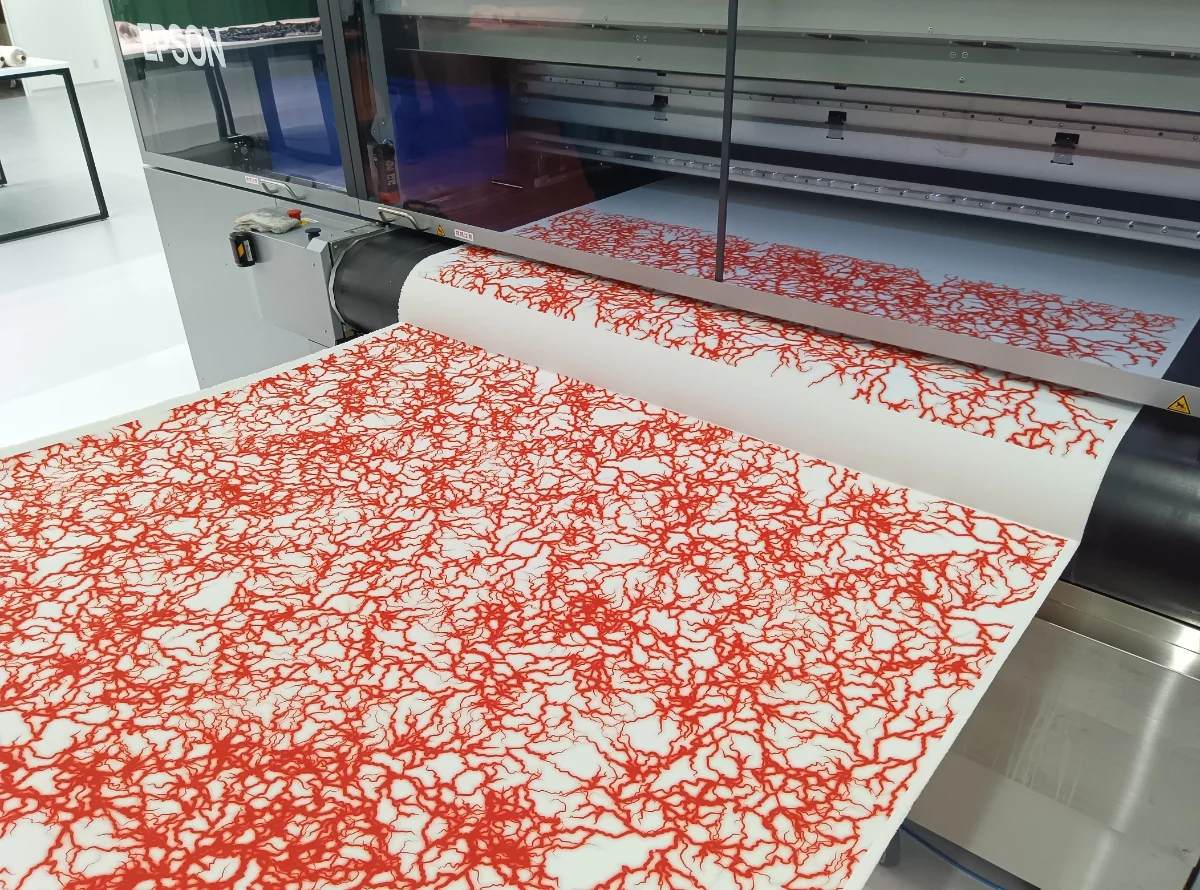
Epson’s commitment to sustainability extended beyond traditional textiles. In addition to printing on Brewed Protein™ materials, Yuima Nakazato displayed a new collection of garments created using Epson’s Dry Fibre Technology and printed with pigment inks by Epson’s Monna Lisa digital textile printer (ML-13000). Epson made significant enhancements to its DFT non-woven fabric, improving production efficiency and enabling the creation of wider sheets, allowing for more intricate and longer-length designs. Additionally, the non-woven fabric sheets used in Nakazato’s new collection were made from discarded fabric off-cuts sourced from sewing factories, further emphasising the sustainability of the collection.
Epson and fashion brand YUIMA NAKAZATO shared a vision of bringing the joy of custom, one-of-a-kind garments to people around the world. By integrating innovative technologies and sustainable practices into their workflow, they aimed to transform the fashion industry’s value chain. This dedication to reducing environmental impact while creating high-quality clothing demonstrated a commitment to both innovation and responsibility.
Epson’s partnership with Yuima Nakazato showcased how technological innovation and sustainability could coexist, driving progress in the fashion industry. By harnessing the power of pigment inkjet printing on Spiber’s Brewed Protein™ material, Epson not only broadened the horizons of creative expression but also set new standards for environmental responsibility. This collaboration was a testament to the potential of integrating advanced technology with sustainable practices, paving the way for a more eco-conscious future in fashion.


