
"The print, finishing and software technology to enable diversification into producing printed packaging has significantly evolved in recent years – making it possible to invest in end-to-end solutions, with a small physical footprint, that allow short to medium-runs to be consistently produced (at a much lower investment point)"
Brendan Perring, General Manager of the IPIA
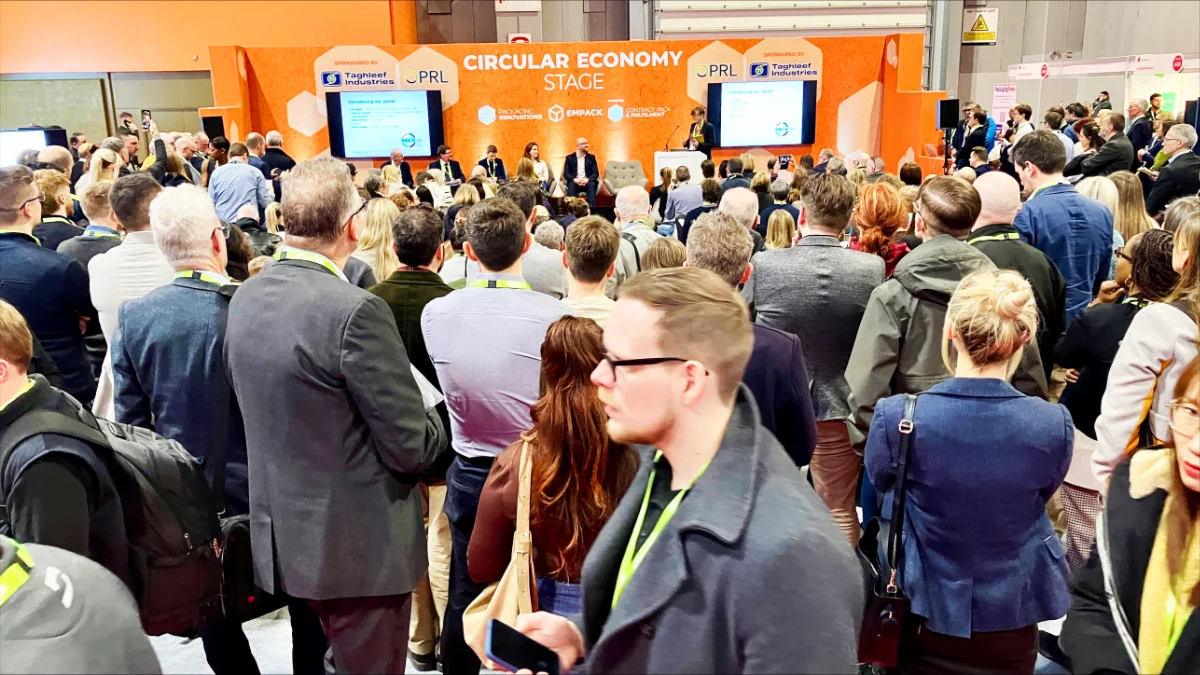
The insights from its panel discussions and presentations have been very valuable, with a particular highlight being “The role of the value chain in delivering pEPR (Extended Producer Responsibility for Packaging).” This is a critical area of consideration for any business thinking about expanding into this sector, or developing their current operation.
Key takeaways from the expert panel are below, which saw Mary Creagh CBE MP – Minister for Nature at DEFRA , Andrew Cassells – Strategic Investment Board, Jim Bligh – The Food and Drink Federation, Paul Vanston – INCPEN, and Talia Goldman – Colpac Ltd, discuss and debate this important topic.
- Increased costs are expected as businesses must take financial responsibility for packaging waste, potentially affecting printers supplying materials.
- There will be a stronger push for sustainable materials, requiring shifts towards recyclable inks, coatings, and substrates. Packaging design and innovation will also evolve to meet recyclability standards, impacting production processes.
- Supply chain disruptions may arise as brands adjust to compliance requirements, while administrative burdens will increase due to tracking and reporting obligations.
- New opportunities will emerge for manufacturers specialising in environmentally-friendly solutions, as demand for sustainable packaging grows and the industry will need to adapt quickly, embracing greener practices to stay competitive.


