
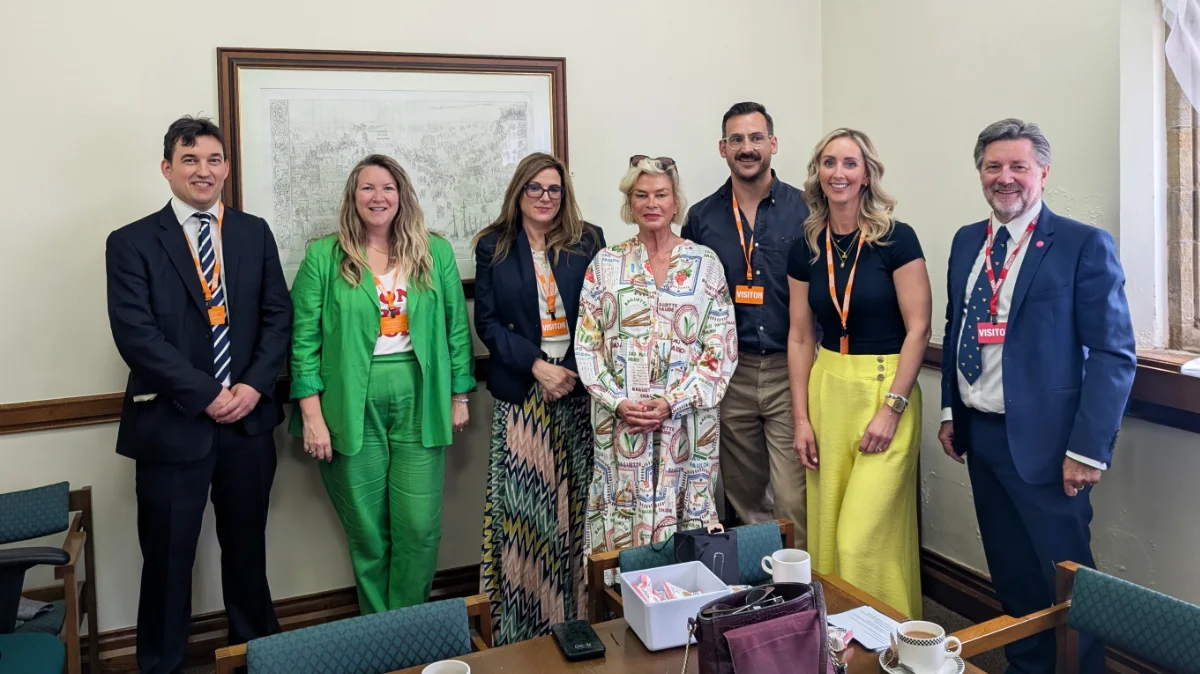
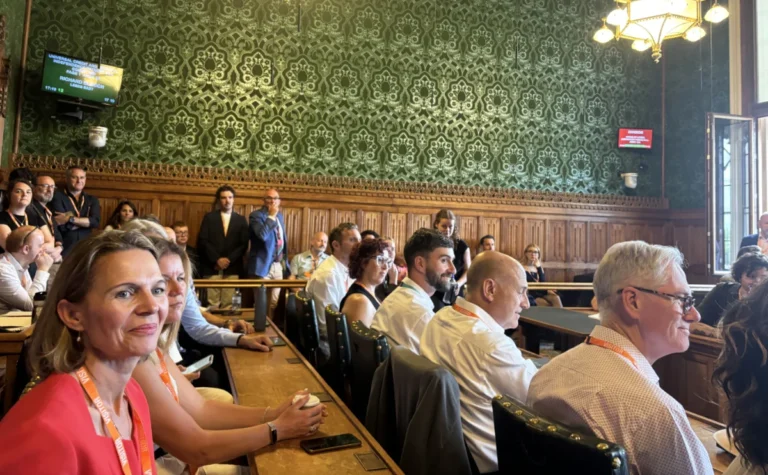
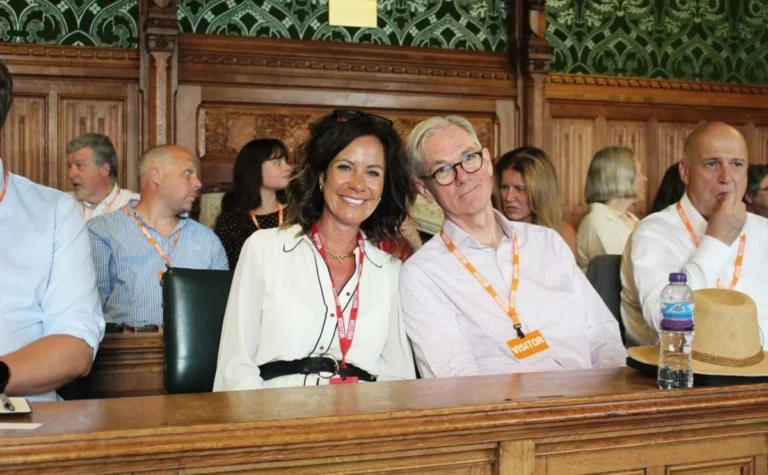
Are campaigns that include print more effective? It is a big question – and one the IPIA tackled head-on last month at the House of Commons with a host of high-profile speakers.
The IPIA is a proud sponsor of The Debating Group, which was founded more than 50 years ago to bring marketing and advertising topics into a political setting, raising the profile of all aspects of the industry.
The IPIA’s “A New Narrative for print” advocacy project seeks to build a conversation about the powerful – and often invisible – roles of print in marketing and advertising communications, textiles, photography, and design. The goal is to influence a wide audience, highlighting and strengthening positive perceptions of print – while showcasing its ability to drive engagement within multi-channel campaigns.
With the timely opportunity to sponsor the July Debate, the IPIA secured four high-profile speakers to both propose and oppose the motion ‘Campaigns that include print are more effective’ as part of the New Narrative directive.
The debate was sponsored by The Debating Group President Christine Jardine MP, chaired by Rachel Gilmour MP, and supported on the night by Vice Chair Jim Rothwell.
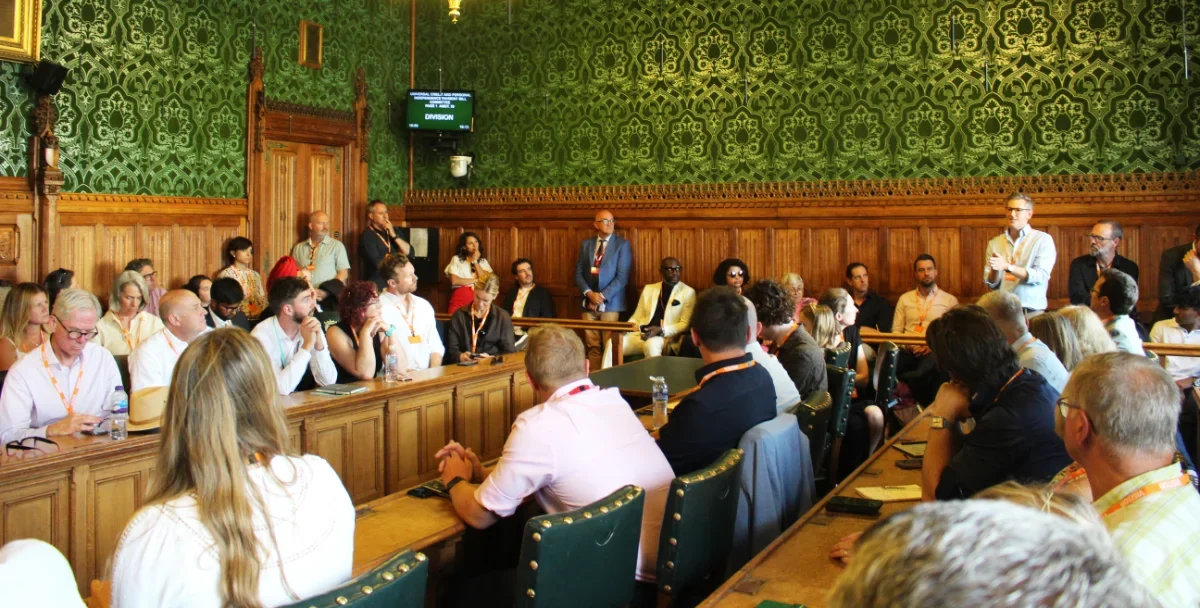
Passions arise
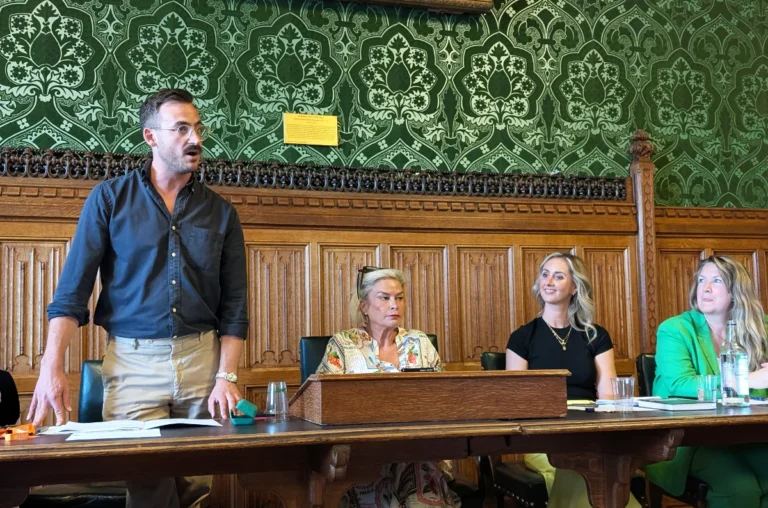
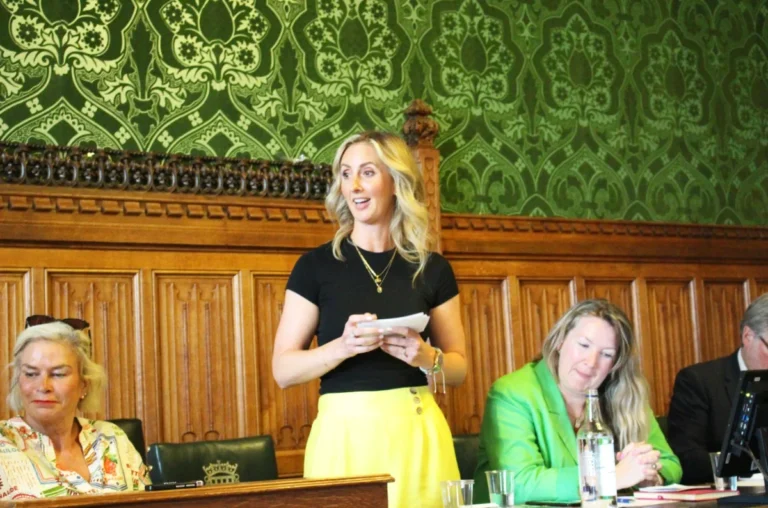
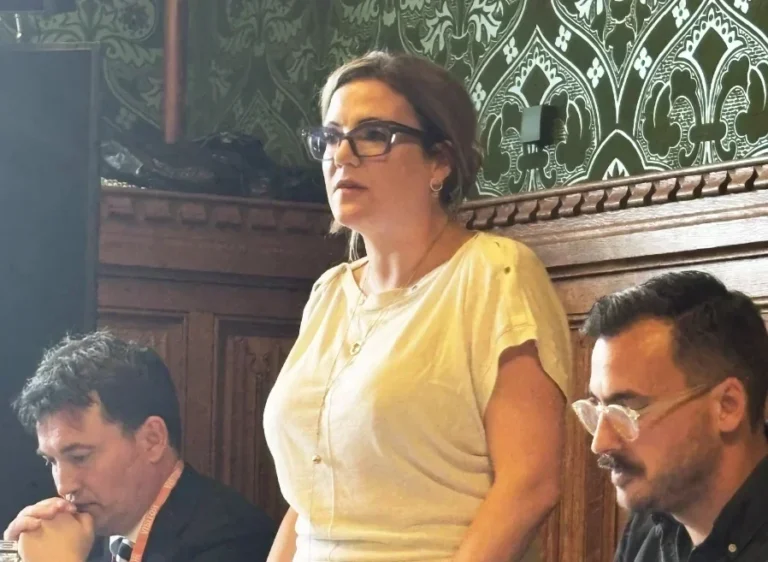
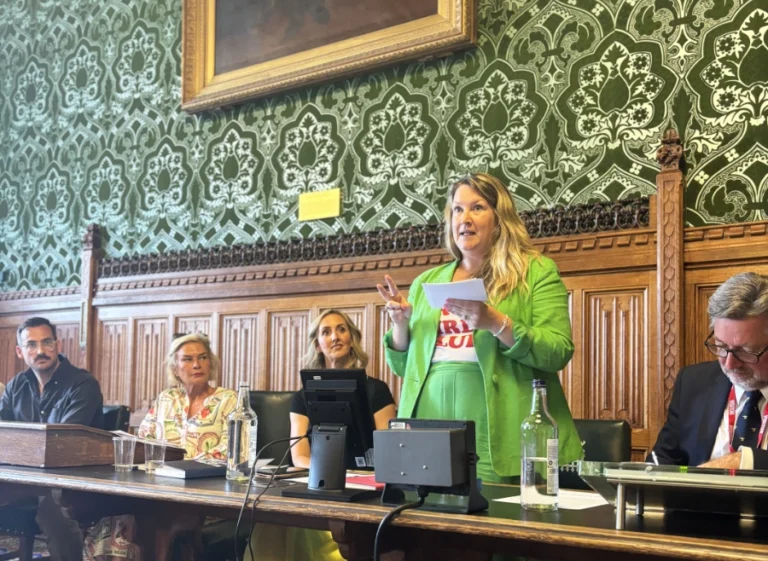
A challenging topic, this open question required skilled speakers to unpick and present arguments that would establish the beneficial role of print in the campaign mix considered by end users. Speaking for the IPIA’s motion were Angus George, Executive Creative Director of Ogilvy and Ogilvy One, and Gemma Greaves, Co-Founder of Nurture and Cabal. Opposing them were Missy Clements, Client Experience Director of 7Dots, and Ellie Hale, Partnerships Director and Founder of AgencyLand.
Angus opened proceedings, positioning himself as the “humble creative in the room” and sharing why print had been important in his own life as a designer – and why it continues to play an integral role in the campaigns he and his colleagues create. He stressed that “Print makes it real,” emphasising the physicality and permanence that digital cannot replicate, but can complement.
He underlined that the motion was not about print versus digital, but about how print delivers trust and truth to the recipient. He cited KFC’s chicken shortage campaign as a case study, arguing that the company’s printed apology achieved an impact a social post could not have matched – while working to stimulate digital conversations at the same time.
The fact that KFC committed its apology to print sent a strong, unequivocal message in a medium that could literally be felt. With two ads alone achieving a reach of over 790 million and a 219 percent increase in positive brand sentiment, Angus set a powerful tone. He further pointed to digital-first companies that turn to print to extend reach and reinforce messaging, clearly demonstrating the partnership between print and digital for maximum effectiveness.
He also reminded the audience that the IPIA’s in-depth research – conducted by global agency Madano – had shown a remarkable 99.1 percent positive sentiment towards print. He emphasised that while digital accelerates reach, print can do the heavy lifting, often in ways that are not immediately recognised as print.
Missy opened for the opposition by clarifying the motion and framing her points around audience insight rather than channel positioning. She made the case that the presence of print alone does not make campaigns effective, while acknowledging its value in the mix. Campaign success, she argued, depends on how audiences are engaged and whether the right insights drive the media choice. She urged the audience to prefer campaigns designed with audience participation in mind, rather than being led purely by the channels available.
A deeper connection
Gemma, seconding for the IPIA’s motion, built on the emotional and practical reasons why print works. Citing studies showing that 70 percent of consumers feel more valued when they receive physical mail than digital messages, she posed the question – why?
She argued that print is personal, tangible, and something someone has taken the time and effort to create, package, and send just for you – creating a powerful sense of connection. While digital can reach millions, she said, print reaches hearts. Keen to stress the partnership between channels, she declared that print and digital are “partners in persuasion.” She also emphasised that print extends the impact of digital and TV campaigns, allowing audiences to hold onto the story.
Ellie followed for the opposition, focusing on measurement and audience needs. She highlighted the preference for digital in audience habits, arguing that it delivers cognitive ease, relevance, and personalisation – areas in which she believed print cannot compete. While acknowledging that print can be emotional and beautiful, she maintained that it cannot replace or mirror digital’s role.
A kaleidoscope of discussion
Before the closing statements, print and marketing professionals in the audience were invited to share their observations, bringing a range of case studies, facts, figures, and personal stories to the discussion.
Insightful contributions came from across the print and marketing industries, including Tara Pickles (JICMail), Phil Gaskin (XMPie), Marine Kerivel-Brown (Duplo), Liz Bowerman (Thistle and Rose Print Consultancy), Louise Murphy (Marketreach), Steven Gray (Omnicom), Clive Hale, Henry Oliver (Opinium), Adriana Wertheimer (Base Creative), James Delves (CIM), Mark Stephenson (Fujifilm), Mike Hughes (Latcham) and Rupert Smith (Newsworks), who referenced research showing print as a highly successful medium.
Owen Purkis (Citipost) shared the Boden case study, where catalogues were dropped in favour of digital-only marketing – but later reinstated after profits declined, proving the value of print alongside digital. Sam Petyan (Axon) offered a medical perspective, noting that printed information is utilised in such settings for the very reason that it is trusted and perceived as factual by its recipients.
In the closing speeches, Missy reiterated her argument to focus on audience need over channel choice, winning over some in the room. Angus concluded: “This debate is not about print versus digital, it is about recognising the strengths of both. Print’s effectiveness is rooted in its trust, credibility, permanence, and its ability to cut through digital clutter. It offers a sanctuary for focused attention; it’s a powerful platform for genuine engagement – and to dismiss it is to overlook a vitally effective and deeply human form of communication, which continues to shape opinion and leave a lasting impact.”
The final vote awarded the win to the IPIA by majority, but the quality of the opposing speaker’s arguments – and their incisive views on the place of print within multi-channel digital campaigns – was applauded. Discussion, debate and networking then continued in the nearby Westminster Arms over a well-earned drink for speakers and guests alike.
On behalf of the IPIA’s Council, a sincere thank you to the amazing team that worked behind the scenes to deliver such an inspirational and powerful event: Charles Rogers, President of the IPIA and Managing Director of Portland Media – Carey Trevill, Managing Director of Mission Element – Natalie Evans, Associate General Manager of the IPIA – and Brendan Perring, General Manager of the IPIA.
Read the full debate report here: bit.ly/ipiadebate25
To find out more about A New Narrative for Print, please visit: ipia.org.uk/nn
Look out for the next session of The Debating Group here: debatinggroup.co.uk


