Les Csonge, Digital Publishing Consultant, Optimum Publishing Group talks to General Manager, Brendan Perring at the IPIA, sharing a compelling vision for the future of print and digital integration.
Les has spent the majority of his career at the intersection of print and digital: “I’ve spent over 20 years now in digital publishing. Before that, I was in the print industry. So, I’ve spent the last 20 years explaining to people that digital editions or digital versions of their print, if that’s a magazine, show guide, whatever it is, is a good thing to do and all the reasons for doing that.”
His perspective is rooted in lived experience of both mediums, and in watching the technological landscape shift dramatically over two decades: “What happened about 20 years ago is everything changed because the iPhone was born… And all of a sudden, that started to become powerful.”
Flipping the model
The statistics speak for themselves says Les: “Let’s take LinkedIn as a business format. Now, 70% of people access their LinkedIn via the mobile app… For things like Facebook, 98% of people access and use Facebook via their smartphone. The concept is the smartphone is king in the digital world. It’s massive. Everything has got to work on the phone.
“We have all spent millions of pounds over the years on building systems or finding a way to take a typical size magazine and bring it down to the size of a mobile phone screen. Because normally it just won’t work. You can’t read an ordinary magazine on a mobile phone screen.”
That effort has involved both technology and manual intervention. But Les began asking a different question: “If people will read things on a mobile phone, which they do… Why wouldn’t they read something of that size in print?”
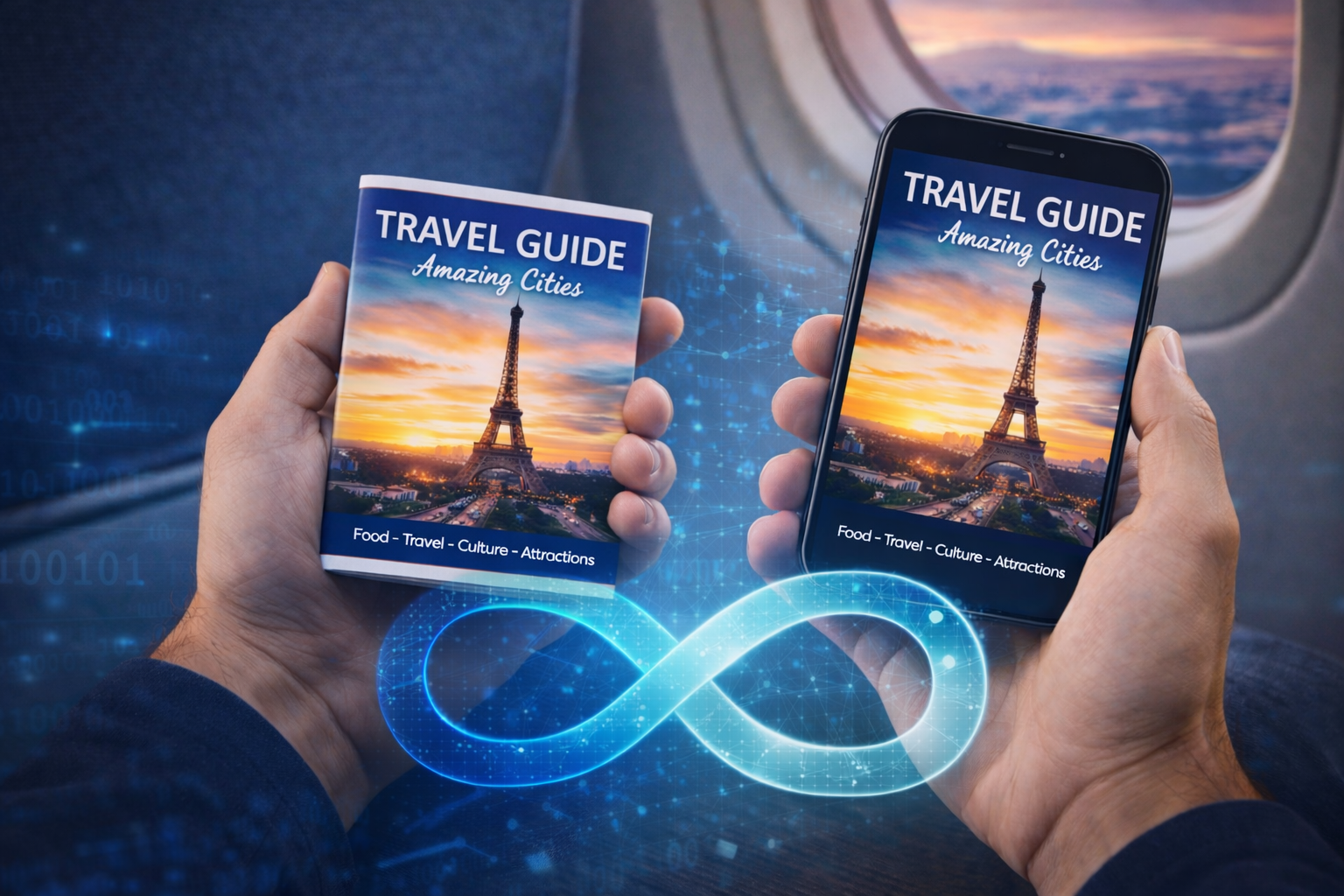
Rather than endlessly adapting A4 print to mobile, why not design print in a mobile-friendly format from the outset? It is a deceptively simple idea with significant implications.
The benefits are not purely conceptual, they are commercial and logistical too: “It’s got some massive cost savings, because it’s much cheaper to print this than it is to print A4.
“Distribution costs reduce. Weight reduces. Mailing becomes more economical. Supplementing within existing product dispatches becomes easier.”
Portability is another powerful advantage says Les: “These devices were called mobile phones for a reason because we’re mobile… But you know what? I don’t want to hold it in my hand all the time. I want to be able to put it in my pocket.”
He sees strong potential for formats such as show guides, event materials and targeted marketing pieces: “I am sure, I have no doubt whatsoever, we will soon see some proper mobile magazines.”
A practical reimagining of print and digital
Despite two decades in digital publishing, Les is clear about his belief in print’s enduring power: “I’ve always said… that I still love print. And I do personally still love print.
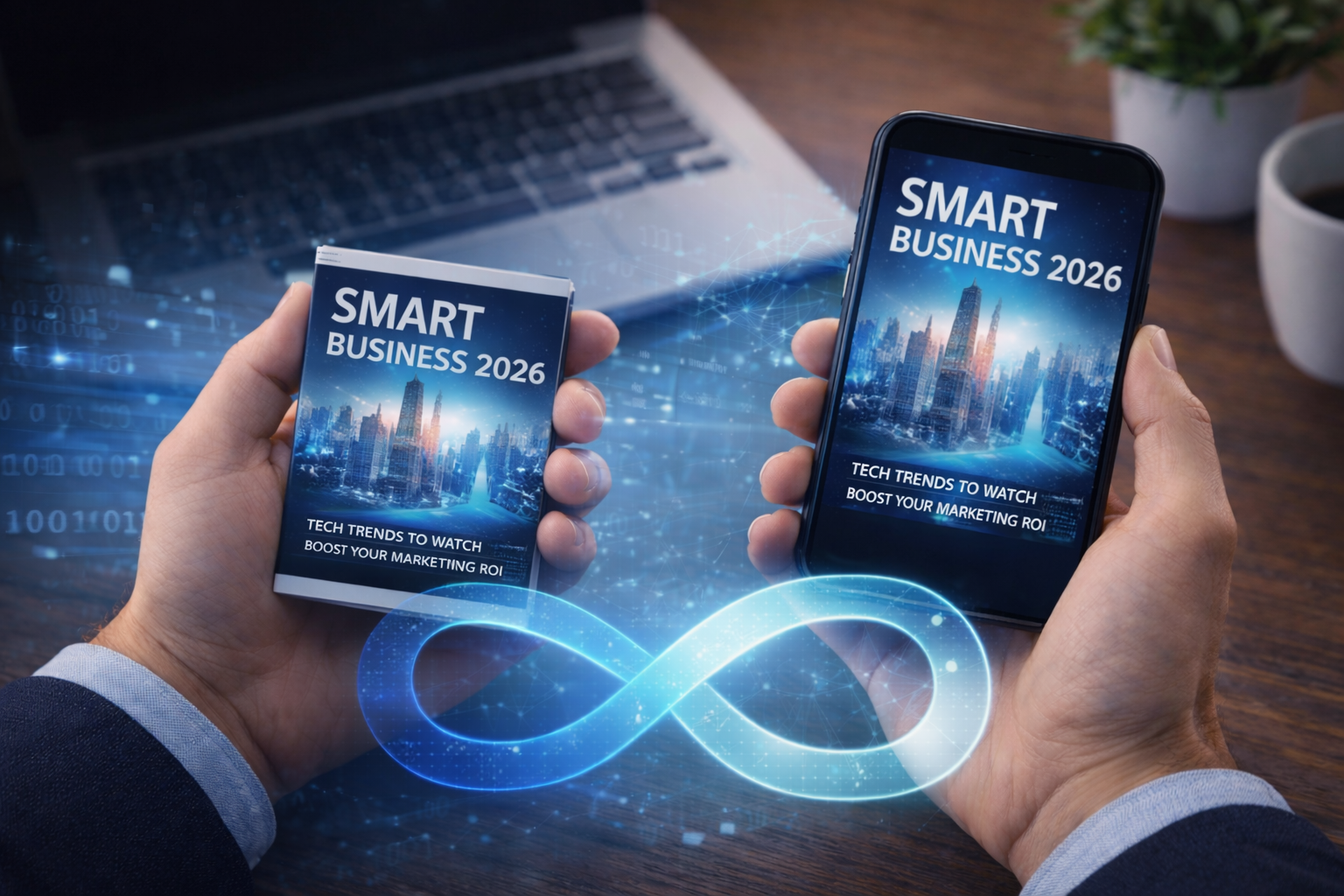
“It shouldn’t be a competition between which is the most powerful. Is print powerful or is digital powerful? They’re both powerful. What’s most powerful is the two of them working together. That is the most powerful thing that anybody can do, is have them working in tandem.
“They are more than close to working with each other. They’re the same layout, the same pictures, the same words. It’s an exact replica that works both in print and on a mobile phone.
“This removes friction. It removes barriers. And it simplifies the transition from digital data to physical print, something that industry research consistently identifies as a sticking point for marketers.”
Les is also unequivocal about the longevity of print: “When people say to me… is print dead? And of course it’s not. Print will always be here and it’s still powerful. It might metamorphosis and it might change and become more niche. And by doing that, it’s probably going to become even more powerful.
“The idea of mobile-sized print formats is not about diminishing print’s role. It is about aligning it with how people already consume content. By designing for the smartphone first, and allowing print to mirror that experience, the two mediums become seamless extensions of each other.”
BlueToad and the Next Phase
Alongside his work with Optimum Publishing, Les continues to work closely with BlueToad, a longstanding IPIA member and digital publishing provider. Increasingly, publishers want more than static PDFs says Les: “They’re wanting to take it seriously. They’re wanting to get video and audio in there, making it far more advanced.”
Artificial intelligence is now also playing a transformative role Les emphasises: “Some tasks that we’ve been performing for many years, have been manually done with human teams. And one thing that’s happening with us now is that AI is now doing that for us. That, of course, is super-fast and therefore super cost effective.”
For Les, the direction of travel is clear: reduce complexity, reduce cost, and strengthen the relationship between print and digital. In doing so, he is not replacing one with the other, but proving, once again, that the most powerful future for publishing lies in the two working as one.