
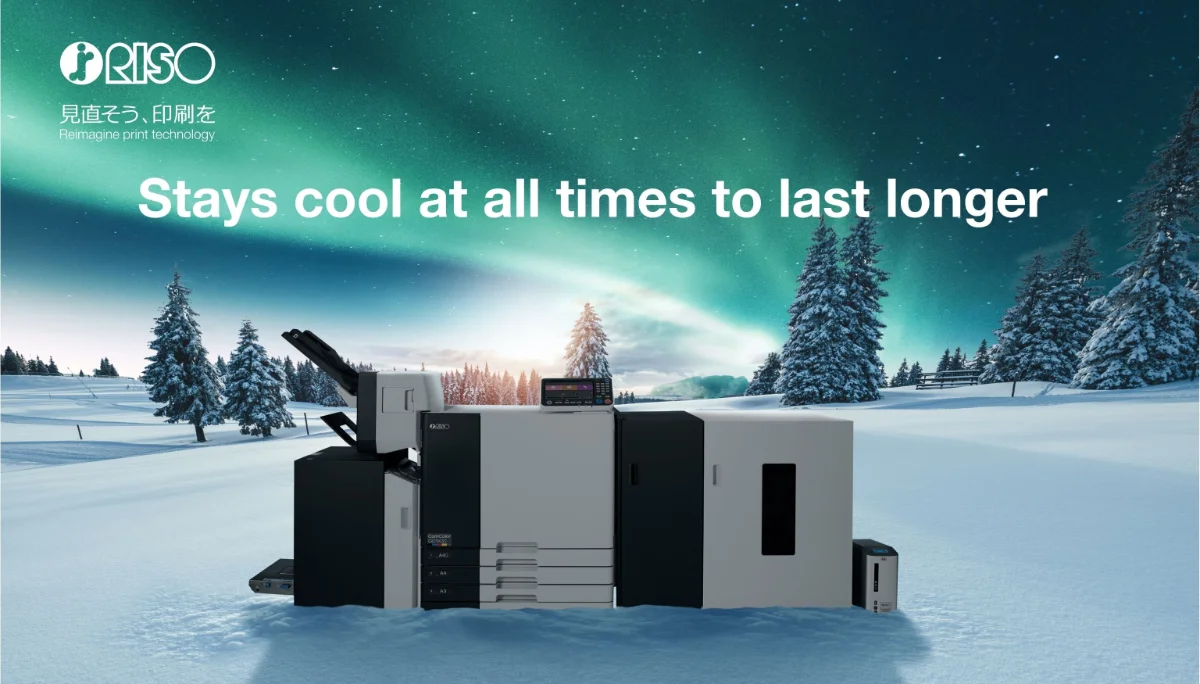
However, as we navigate 2026, the economic landscape has shifted. Energy price volatility and the UK’s transition toward “Net Zero” mean that heat is no longer just a byproduct of printing—it is a financial and operational liability.
The Problem with High-Heat Printing
Traditional toner-based printers often reach temperatures of 180 °C. While effective for melting toner onto paper, this heat creates a chain reaction of production headaches:
- Paper Stress: High heat strips moisture from paper, causing it to curl and become unstable.
- Finishing Delays: Curled paper is the primary cause of jams in high-speed folders, inserters, and binders.
- Wear and Tear: Heat is the enemy of any machine. It degrades rollers and internal electronics, leading to more frequent service calls and downtime.
Keeping it Cool with RISO
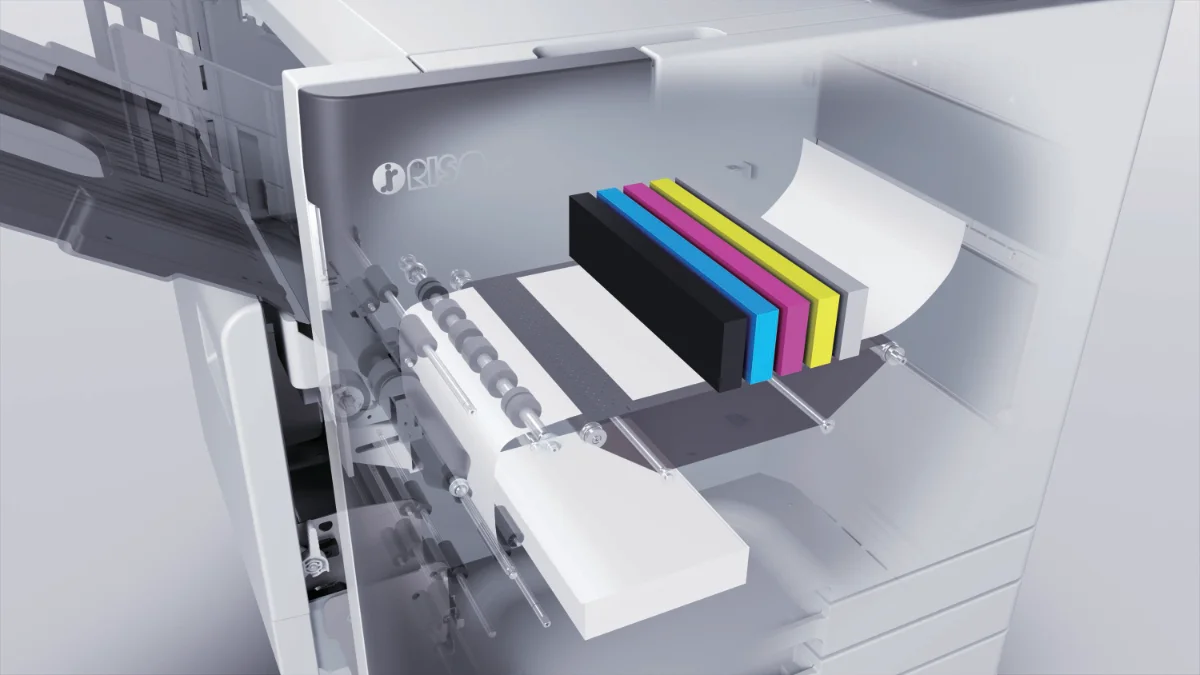
At RISO, we approach productivity through a “Cold Printing” process. Our FORCEJET™ technology uses a mechanical ink delivery system that requires zero heat to apply or dry the ink.
With no heat, fewer parts and a simple paper path, we can offer industry leading speeds of up to 330ppm and extremely high levels of reliability. At the same time, RISO’s consume up to 91 % less energy than comparable toner systems.
By removing the fuser from the equation, we solve the “curling” problem at the source. Because the paper remains flat and dimensionally stable, it can move instantly from the printer into high-speed finishing equipment without the need for “rest time” or manual intervention.
The New Narrative for 2026
Sustainability is often framed as a “nice-to-have” or a marketing badge. But for the independent printer, the “Cold Revolution” is a pragmatic business strategy. When you lower your power consumption, you aren’t just helping the planet; you are lowering your overheads and increasing your equipment’s “uptime” by reducing heat-related component wear.
When your equipment stays cool, your production stays fluid. In 2026, the most competitive printers won’t be the ones running the hottest machines—they’ll be the ones keeping their cool.


