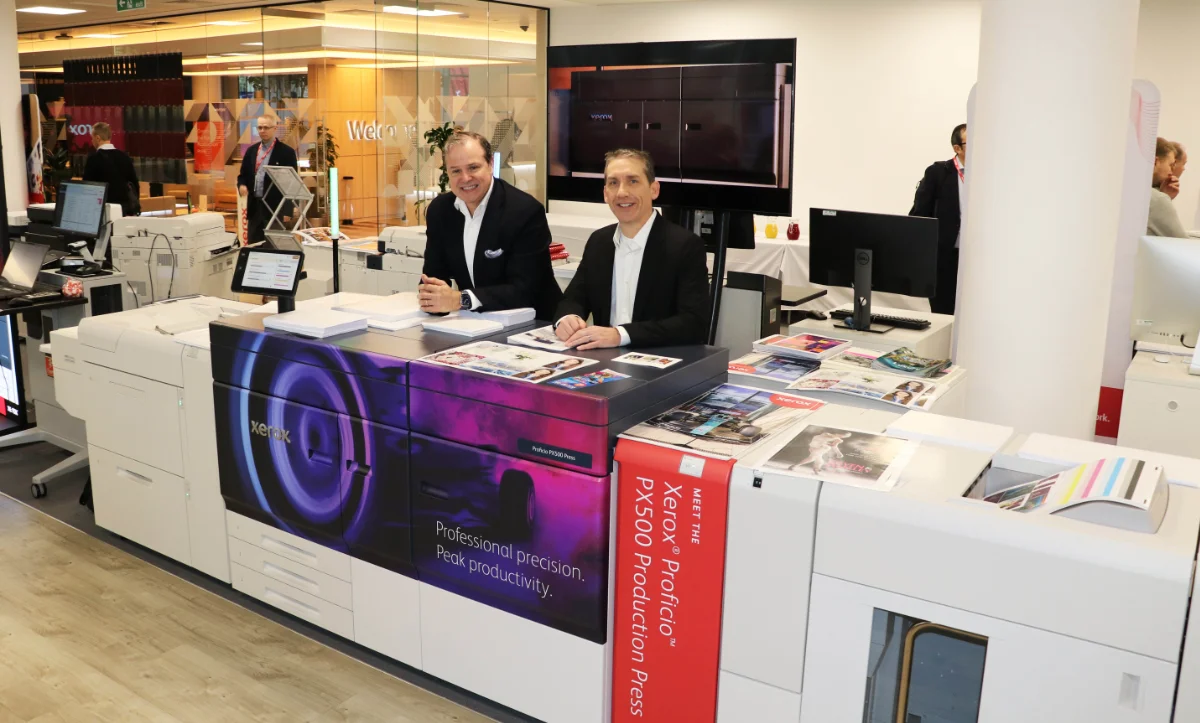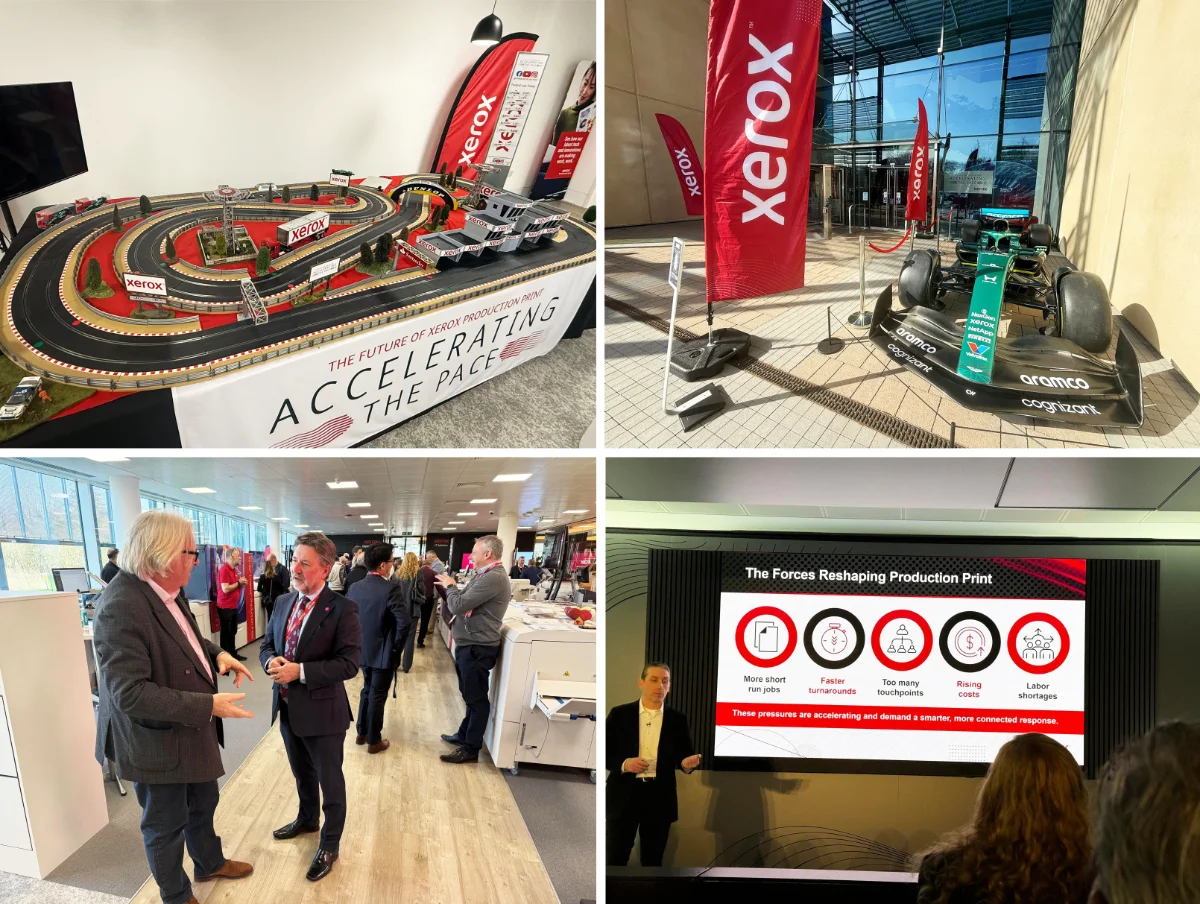
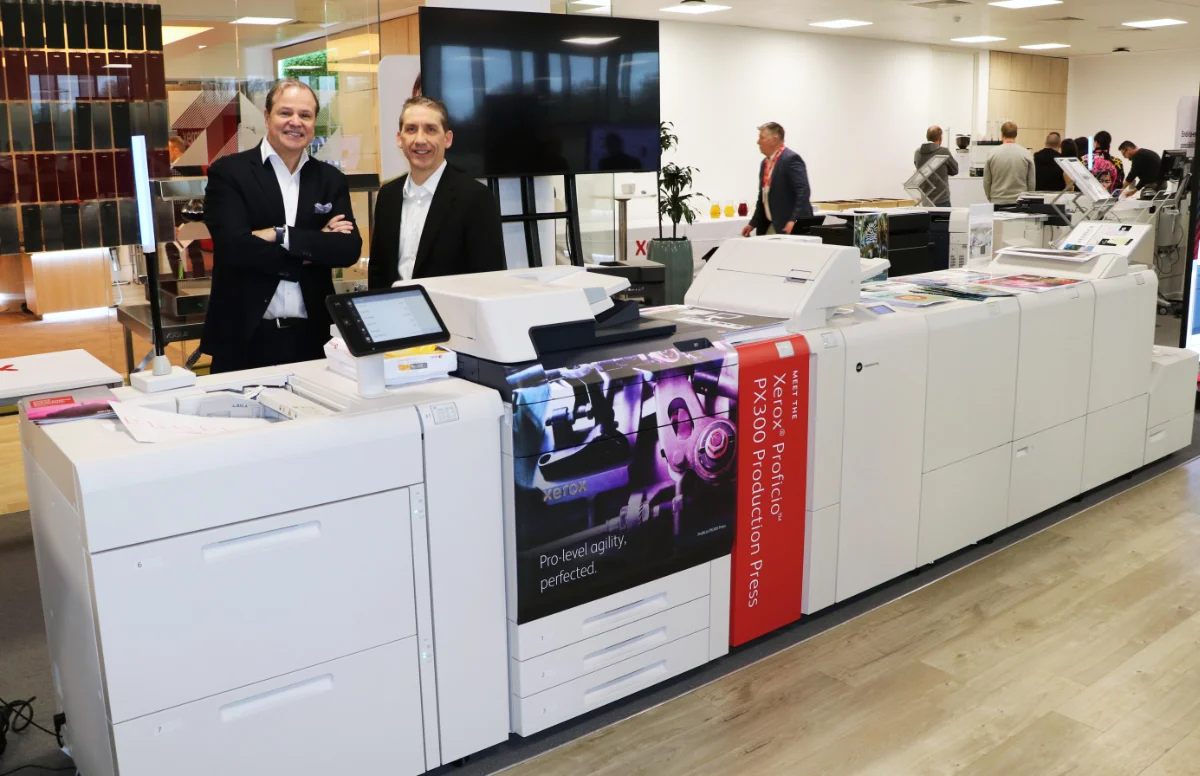
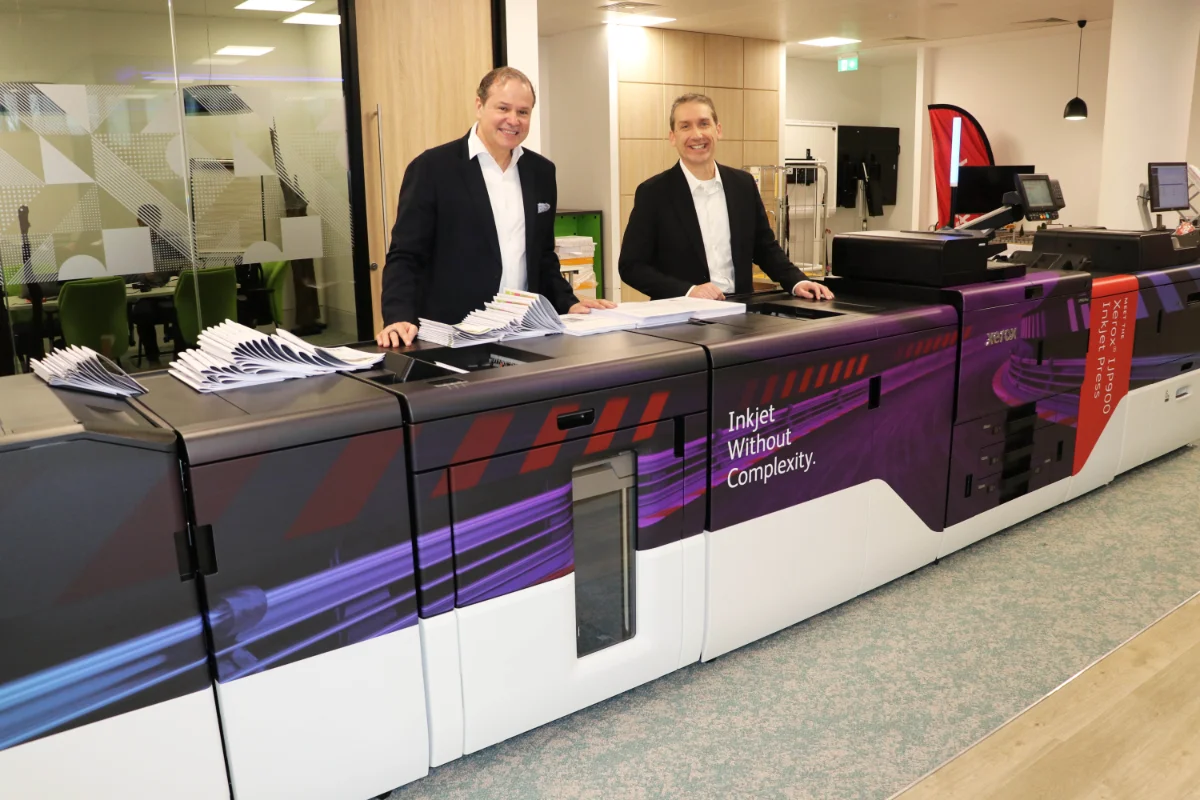
The event brought together customers, partners and media to see the latest developments in Xerox’s production portfolio, including the new Proficio PX300 and PX500 presses, the IJP900 Inkjet Press, enhancements to the PrimeLink C9200 Series, and new automation capabilities through FreeFlow Vision Connect 1.5. Live demonstrations also showcased what Xerox describes as a connected Production Ecosystem designed to help print businesses improve efficiency and expand into new areas of growth.
In addition, the event showcased the technology partnership and collaboration between Xerox and the Aston Martin F1 Team, which has been developed to strengthen the respective value that both organisations can deliver to their respective markets.
Senior leadership used the event to set out Xerox’s strategic direction, with Terry Antinora, President of Global Production Print Services; Jacques-Edouard Gueden, Chief Revenue Officer; and Matthew Raab, Director of Global Portfolio Marketing, outlining how the company intends to support the evolving needs of print providers.
The IPIA’s President Charles Rogers attended the event and sat down with Jacques-Edouard to discuss the technology launches and the strategic evolution of Xerox. He emphasised that it sees production print continuing to play a central role in modern communications, particularly as print becomes more integrated with digital channels.

“We certainly see the industry changing in a lot of ways. If we look at the movement toward inkjet, that is more of a technology play, but we focus on the outcomes. In production print, it is about print driving an action and delivering value to whoever is using print.”
Jacques-Edouard Gueden, Chief Revenue Officer
Data driven growth
Jacques-Edouard also highlighted the growing importance of data-driven and integrated communications, suggesting that the next phase of development will see print increasingly connected with wider marketing activity: “I see the biggest change coming in omnichannel communications. We have talked about omnichannel for a long time, but we now see digital technology overlapping and interfacing with print technology in a much more meaningful way.”
Artificial intelligence is also expected to play a major role in this shift, although Jacques-Edouard stressed that AI would become embedded within everyday workflows, rather than existing as a separate technology: “AI is not a discrete thing. It is going to become integrated into the fabric of everything we do.”
Alongside automation and workflow developments, Xerox also believes differentiation will be a key driver of growth for print businesses.
“The feedback we have from commercial printers and graphic communications companies is about how you can swiftly create differentiation – personalisation and embellishment are becoming more important,” Jacques-Edouard said.
He further noted that new tools under development are also designed to help print providers engage more effectively with customers by making it easier to visualise and develop applications: “You need to create something with a clear purpose and then the system will help guide your thinking. The professional in front of the client can quickly create something that really meets the purpose, and it becomes much more painless than it is today.”
Realising the potential of automation
Automation formed another central theme of the event, with Xerox positioning workflow integration and cloud-based intelligence as essential tools for improving productivity. According to Jacques-Edouard, the automation advances that Xerox is developing and deploying will reshape the role of print professionals rather than replace them.
“It is really about how the skill set evolves,” he emphasises, adding: “A highly skilled press operator used to make manual adjustments, but now much of that happens automatically. That allows them to focus on other parts of the process – job intake, workflow and finishing.”
He stressed that automation also requires a new type of expertise focused on delivering outcomes rather than simply producing print: “It is not about getting rid of the highly skilled worker. It is about evolving those skills to be more relevant in a world where AI is driving a lot of the press setup. Becoming an adviser to customers is a skill in itself – helping them understand what is possible.”
Jacques-Edouard also challenged the assumption that technology adoption is driven primarily by younger workers: “The average age of workers in print companies is increasing, but I am changing my mind about the idea that you need to be young to be comfortable with technology.
“I am highly surprised by the speed at which experienced employees adopt new technology. It is more about openness and mindset than age. If your mindset is that you need to learn something new every day, then you will thrive.”
Customer centric growth
The company’s wider strategy places strong emphasis on partnership with print businesses, with Xerox positioning customer success as the foundation of its own growth.
“Our success is built on the success of our clients – full stop,” Jacques-Edouard said.
He noted that success can take different forms depending on the market segment, from high-reliability transactional environments to creative marketing applications: “For some customers, success is about the ability to produce in a very reliable and effective way. For others, it is about creativity and communication. There is always a profitability and productivity element, but how that is achieved will vary.”
Despite longstanding predictions and myths about the decline of print from outside of the industry, Jacques-Edouard also emphasised Xerox continues to see a resilient and evolving market: “Some people think the printing industry is going into decline. Not at all. We are not seeing that. What we see is clients moving into different areas and adapting their businesses.”
He said Xerox has also structured its organisation to reflect the importance of industry expertise and long-term customer relationships: “You cannot be a trusted adviser without a deep understanding of the client experience and the client’s ambitions. That is why we have created a dedicated organisation for this industry.”
Looking ahead, Xerox expects successful print businesses to combine technology adoption with a clear focus on customer outcomes. With Jacques-Edouard highlighting that a successful print operation will have to be, “efficient and technology-led, but really focused on the outcome, what they are trying to achieve, and how print connects with data and digital communications.”
He also emphasised that innovation will increasingly depend on the integration of hardware and software, while the most successful print businesses will increasingly need to focus on specialisation: “We will continue to deliver hardware innovation, but it cannot be separated from software innovation. Being able to describe something and have it built and flow directly to the printer to create a tangible piece – that is the kind of innovation that is coming.
“The companies that will thrive will become experts in their client base. There is priceless value in really understanding your customers. Whether it is healthcare, retail or financial services, deep knowledge of a sector will create opportunities.”
Taken together, the technologies and strategy presented at the Future of Production Print event reinforced Xerox’s intention to remain a major force in the production print sector, with continued investment in automation, inkjet and workflow integration aimed at supporting the long-term growth of print providers.